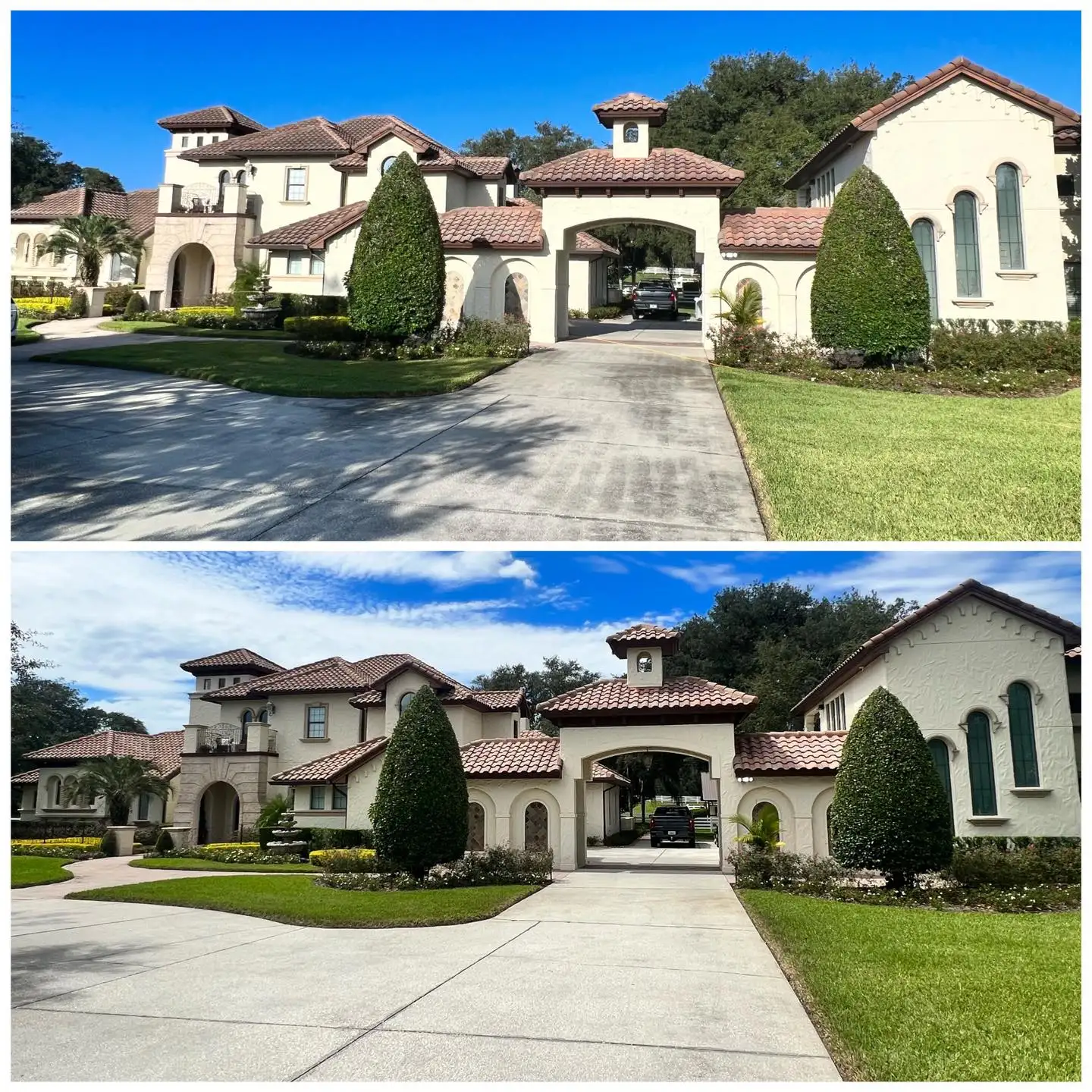


Orlando HOA communities take a beating that most residential-only contractors are not equipped to handle. Between the May-to-October rain cycle and year-round warmth, algae, mildew, and mold colonize building siding, rooftops, pool enclosures, and common-area concrete within weeks. Irrigation systems running across landscaped commons leave rust stains on sidewalks and entry monuments in a matter of months. Large oaks fill gutters on multi-building properties faster than even a six-month cleaning cycle can manage. And when breezeways, drive aisles, and active walkways are involved, the scheduling logistics and pedestrian safety concerns go well beyond what a one-truck residential crew can handle.
Holliday’s Pressure Washing Services runs HOA and community accounts as a core part of the business. We show up with specialty equipment built for this scale of work: a Curbinator curb cleaner, Siamesed high-GPM pressure washers, a 36-inch industrial surface cleaner, a gutter-vac with on-pole camera, and long-reach soft-wash rigs that reach almost four stories from the ground. We carry our own 535-gallon water tank and fire-hydrant meters so we never depend on your community’s water system. And we run the same communication standard on HOA accounts that we do on residential: ETA texts, in-progress photos, electronic invoicing, and a post-service follow-up call from our office admin, Tina.
Call 407-276-1343 or submit a request through our website to schedule a site walkthrough. Every HOA proposal is built line by line so the board can review exactly what’s included, what’s excluded, and what it costs before signing off.

No two HOA communities share the same mix of surfaces, building heights, or access conditions, so every job is quoted as a custom proposal. Here are the per-service rates we use to build that proposal:
What drives your quote up or down? Total square footage across building exteriors, common-area concrete, and roofing sets the baseline. The number of stories per building increases labor and access time. Roof material mix matters since barrel tile is the most expensive per square foot and asphalt shingle the least. Linear feet of curb (Curbinator-cleaned curb is a separate line item) and gutter accessibility factor in. Severity of buildup can roughly double the base rate on heavily soiled surfaces. Water supply logistics, after-hours or overnight scheduling, and add-on services like rust removal, oil treatment, or graffiti cleanup all affect the total. Recurring contracts (for example, twice per year) include a price break.

We offer a $75 multi-service discount when any two services are combined on the same job. Pair a building wash with a roof clean, or a surface clean with a roof clean, and the discount applies. The trigger is two services, not three. On an HOA contract that packages several service types together, this stacks favorably.
HOAs, apartment complexes, and commercial properties that commit to a recurring schedule receive a price break built into the contract. Twice-per-year cleaning is the most common HOA engagement model because it keeps maintenance budgeted and predictable for the board.
When a board organizes a community-wide individual-homeowner cleanup (driveways and sidewalks, for example) and multiple homes are cleaned in a single mobilization, every participating resident gets a price break, not just the organizer. That’s a real selling point the board can use to drive sign-ups across the neighborhood.

Every exclusion appears in the written estimate so the board is never caught off guard. Wall oxidation removal falls outside our scope, but standard organic cleaning for algae, mildew, and mold is fully available on those same buildings. If community buildings show chalky, fully oxidized siding, we flag it in the proposal so the board knows what to expect. For oil stains on parking areas and driveways, we treat them aggressively with commercial-grade degreasers and hot water, and in many cases the stain lifts completely. When a shadow remains, we disclose that possibility upfront so the board has clear expectations before signing. We focus exclusively on cleaning, not repairs, so gutters, shingles, fencing, and other structural items are documented with photos and reported to the property manager. And we pass on roofs or surfaces that are too damaged to clean safely, including rotted wood, large patches of missing tile, or gutters pulling away from the fascia.

Every building exterior is soft-washed, never hit with high pressure. Our primary cleaning chemistry is sodium hypochlorite mixed with soaps, run through an adjustable proportioner to the lowest effective strength. We start light and increase only when the buildup demands it. Stucco is the most common siding across Orlando-area HOAs, and we also handle vinyl, hardy board, brick, and occasional metal siding. Metal takes extra care: diluted chemicals, a wet surface at all times to prevent flash-drying, and additional rinsing. Before washing starts on any building, the crew tapes up and makes watertight all outdoor electrical outlets, doorbells, security cameras, and garage door openers. Each side of a building is washed and rinsed individually so solution never sits and dries. Communities that also need professional house washing on individual units get the same process and chemistry.

Every roof we touch is soft wash, across every material. No pressure is applied to roofing, period. Asphalt shingle is the most straightforward and the most affordable per square foot. Flat tile requires stronger chemistry but cleans efficiently since all surfaces face upward. Barrel tile is the most labor-intensive because each side must be sprayed from a different angle. Metal roofs stay wet throughout the application to prevent flash-drying and oxidation risk, and our crew never walks a dirty wet metal roof because of the slip hazard. For TPO (the flat-membrane roofing found on most clubhouses and community buildings), we substitute Dragon Juice when the manufacturer’s warranty restricts sodium hypochlorite. That’s a detail boards care about because those clubhouse roofs often carry active manufacturer warranties. Our long-reach equipment handles soft wash roof cleaning from the ground on buildings up to almost four stories tall, keeping workers off the roof when possible.

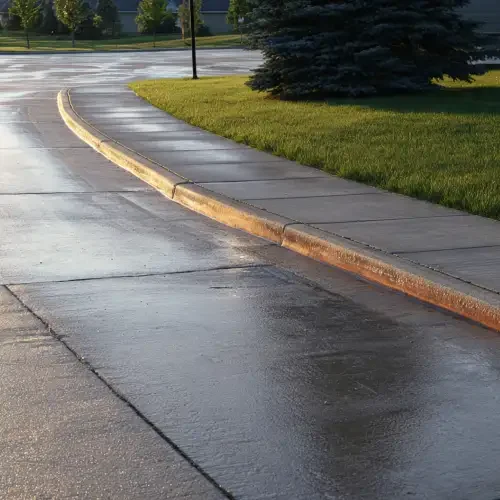
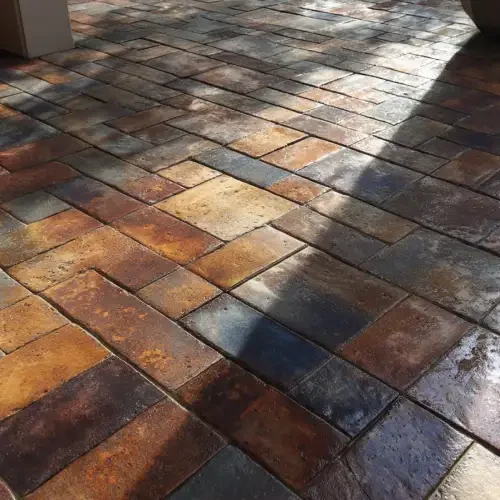
Hard concrete gets high-pressure surface cleaning with our 36-inch industrial surface cleaner. Curbs get a separate Curbinator pass that cleans the flat top, vertical face, and gutter pan in one shot. On HOA and community work, we reverse the typical cleaning order: surface clean first with water only so nothing but water enters storm drains, then apply sodium hypochlorite lightly and let it dry on the cleaned surface. This keeps bleach out of the community’s stormwater system. For stubborn spots, we follow up with a pump-up sprayer at a slightly stronger concentration. Oil stains get a commercial-grade degreaser, stiff-brush agitation, about 20 minutes of dwell time, and a hot water pass at approximately 250°F. Rust from irrigation systems and fertilizer runoff, one of the most common concrete surface problems in Orlando HOAs, is treated with oxalic acid at the minimum effective strength to avoid etching.
Full gutter cleaning and downspout flushing, with bag-and-haul of debris available when the property manager requests it. For multi-story and steep-roofed buildings, our gutter-vac with on-pole camera (roughly 25 feet of reach, with a small screen at the base) lets the crew clean from the ground instead of walking the roof. That removes the single biggest safety risk on a multi-building HOA job. Every downspout is flushed to confirm it drains freely. Gutters that are sagging, pulling off the fascia, or non-functional get documented with photos and reported to the property manager for repair.

Pool screen cleaning is soft wash only. The crew applies solution at an angle so it clings to the screen, starts on the exterior, rinses, then moves inside. Inside, solution goes on the ground first so it can dwell, then the walls and screen panels are worked from top to bottom. All wastewater is pushed out and away from the pool. Pool deck treatment depends on the material: pavers get surface cleaning, painted concrete decks get soft-washed with controlled pressure to protect the paint. We recommend yearly cleaning for community pool enclosures.

We don’t apply sodium hypochlorite near any waterway where runoff could reach the water. For those areas, we use a different eco-friendly solution that cleans without posing a risk to fish or other wildlife, and that applies to any retention pond or drainage channel that’s part of the community property.

We don’t treat every surface with high pressure. Soft washing relies on cleaning chemistry rather than water force, and it’s the right method for surfaces that wouldn’t hold up to aggressive pressure. We match the approach to what the surface needs, and the goal is always a clean result without damage to the property.

Chemical concentrations stay only as strong as the job requires, starting low and adjusting through the proportioner dials only when necessary. Plants are protected during application and rinsed after. The crew wears gloves and respirators throughout. Residents should keep pets indoors until all surfaces are fully dry, since wet pavement with even trace cleaning solution residue can be an irritant if a pet walks through it.

Property management handles resident notifications better than we can. They have the contact list, know which units are vacant, and use channels residents already trust. What residents need to know is the cleaning window, which areas will be active work zones, and that pets should stay indoors until everything is dry. Coordinating through management keeps the message consistent and credible.

We don’t have a reclamation system, so runoff management is built into the cleaning sequence. We surface-clean first so the final light spray lands on a pre-cleaned surface that dries quickly rather than carrying chemistry toward drains. Gas station cleaning that requires blocking floor drains and vacuuming all water is outside what we offer, and we say so upfront rather than take on a job we can’t handle responsibly.


We invested in equipment specifically for community-scale work. The Curbinator handles curbs across an entire community in one mobilization. The 36-inch surface cleaner covers concrete faster than standard residential units. Our Siamesed high-GPM machines combine a 17 GPM unit with an 8 GPM unit for the water volume that multi-building washes demand. The gutter-vac with on-pole camera reaches tall gutters from the ground. And our long-reach soft-wash setup handles buildings approaching four stories without putting anyone on the roof. The result is faster completion, less noise, and fewer disruptions for residents.

We show up with our own water and the meters to refill from hydrants, which means no hoses stretched across common areas all day and no burden on your community’s water bill. For properties where we connect to an on-site source, we coordinate access with the property manager ahead of time so everything is lined up before the crew arrives.

Cones go at both ends of every active work zone. A-frame caution signs are placed at each end of any sidewalk being cleaned. For apartment and multi-family properties, a ground spotter is stationed in breezeways and high-traffic areas. When a resident needs to pass through an active zone, a crew member walks them through under a portable umbrella so they stay dry and free from overspray. That level of care is rare in this industry, and it’s one of the most common things property managers notice on the first job.

We clean concrete surfaces with water first before applying any chemical, so nothing but water reaches the storm drains. For areas near retention ponds, lakes, or canals, we substitute an eco-friendly alternative solution entirely. No sodium hypochlorite goes over open water.

Every HOA job includes an ETA text on the day of service, in-progress photos during the work, on-the-spot damage documentation (captured with meta-glasses), a walkthrough at completion, electronic invoicing, and a follow-up call from Tina several days later. Auto-reminders go out when the next service cycle is due. Property managers get a documented record for every visit, not just an invoice.

We have done overnight commercial work starting as early as 1:30 AM to finish before residents or employees arrive. For HOAs where the board wants common-area cleaning done before anyone is awake, we make that happen.


A board member or property manager reaches out by calling 407-276-1343 or submitting a request through the website. Our office admin, Tina, handles the intake call. She confirms what surfaces need attention, what the primary issues are (algae, rust, oil, gutter clogs, graffiti), how many buildings are involved, what roof types are present, whether there are waterways nearby, and whether after-hours scheduling is needed. These details shape the proposal.
Daniel, the owner, prepares a written proposal that breaks the scope down line by line: which surfaces and buildings are covered, the pricing structure, all disclosures (oil removal expectations, no oxidation work, cleaning only with no repairs), and a proposed schedule. Multi-service and recurring-contract discounts are applied where they fit. The board gets a document they can mark up, discuss, and approve on their timeline.
Once the proposal is signed, we lock in service dates. We leave resident notification to the property manager since you have the correct contact list and know which units are occupied. We can provide notification templates and door-hanger language if the board wants them.
The crew texts the property manager with an ETA on service day. On site, we walk the property together to confirm scope, hook up to the water supply (community source or our own tank), and set up the safety perimeter: cones, A-frame signs, and a ground spotter for breezeways. All building electricals get taped and sealed before washing starts.
Buildings are soft-washed one side at a time. The crew applies solution, rinses, checks for missed spots, then moves to the next face. Metal siding gets diluted chemistry and stays wet throughout. Roofs are treated from the ground wherever the long-reach equipment allows. Neutropods drop into downspouts to neutralize chemical runoff and protect landscaping. Trash bags catch debris at each downspout. The entire roof is rinsed completely so no chemical sits and dries. On TPO roofs, Dragon Juice replaces sodium hypochlorite when the warranty requires it. Any cracked tiles, missing pieces, or flashing problems are photographed and reported to the manager immediately.
The Curbinator runs along every curb line. Sidewalks and drive aisles are surface cleaned with water first, then treated with chemical that dries in place. Oil stains get the degreaser, brush, dwell, and hot-water treatment. Rust is handled with oxalic acid at controlled strength. Graffiti, if present, gets the specialty removal solution.
Gutters are cleaned by hand, blower, or gutter-vac depending on height and access. Every downspout is flushed. Pool enclosures are soft-washed exterior first, then interior, with all wastewater directed away from the pool.
We walk the property with the manager to verify every surface. The spot-free roof guarantee means anything visible gets addressed before we leave. Completion photos are sent, the electronic invoice follows, and Tina calls a few days later to confirm satisfaction and set auto-reminders for the next cycle.
We run a satisfaction guarantee on every job. If something is wrong or if anything was damaged, we come back and fix it. Tina’s follow-up call a few days after service gives the property manager time to walk the property and flag concerns before we schedule a return trip.
Roof cleaning carries a spot-free guarantee. If visible spots remain after cleaning, we touch them up, though we almost always catch those before leaving the site. Our guarantee covers the result on the day of service, because Central Florida’s tree canopy and humidity cycle mean organic growth naturally returns within a year or two no matter what. That’s why we recommend recurring service as the real long-term maintenance plan.
Gutter cleaning follows the same philosophy. Gutters refill naturally, especially under oak canopy, so we recommend cleaning at least every six months, more often with heavy tree cover, and always before rainy season. Auto-reminders keep the schedule on track without the board having to manage it manually.
Our responsibility covers anything caused by the crew during the job, from property damage to missed spots within the spot-free window. Pre-existing conditions like rotted wood, loose tile, and failing flashings are documented before work begins so both sides have clear expectations.


If you manage a larger complex or a community that needs exterior cleaning on a regular cycle, a recurring contract is worth discussing. For clients who schedule cleaning more frequently, such as twice a year for a big apartment complex, we can offer a little break in the price for that ongoing relationship. There’s no flat rate we advertise for contract work since it depends on the property size and scope, but the more consistent the schedule, the more flexibility we have on pricing. It’s a practical arrangement: you get reliable, planned maintenance at a better rate, and we build your property into our calendar. Reach out, and we’ll include a contract option alongside your initial estimate.
Every community is quoted as a custom proposal. The building blocks include building washing at approximately $0.12 to $0.20 per square foot, roof cleaning from $0.18/sq ft (asphalt shingle) to $0.35/sq ft (barrel tile), concrete surface cleaning at approximately $0.15/sq ft, and gutter cleaning at $1.25 to $3.00 per linear foot. Full community pricing is available upon request after a site walkthrough.
We carry a 535-gallon on-board water tank and have fire-hydrant meters for full self-sufficiency. Most commercial and HOA jobs require contractor-supplied water, and we arrive ready. If the community has an accessible water source, we can hook up to that instead.
We recommend the property manager or board handle resident notification since you have the correct contact list and know which units are occupied. We can provide notification templates and door-hanger notes if the board requests them.
Soft wash on all buildings, all roofs, and all pool screen enclosures. High-pressure surface cleaning is only used on hard concrete: sidewalks, curbs, drive aisles, and parking areas.
Yes. We schedule around your community’s needs, including after-hours and overnight windows. We have started jobs as early as 1:30 AM to have the work finished before residents are up and moving.
Wall oxidation removal falls outside our scope because the process is labor-intensive and produces inconsistent results across different siding types. Standard organic cleaning for algae, mildew, and mold is fully available on the same buildings, and we flag oxidation in the proposal so the board knows exactly what to expect.
Gutter cleaning at least every six months, and always before rainy season. Pool screen enclosures once per year. Building exteriors, roofs, sidewalks, and curbs on annual or semi-annual cycles. We set auto-reminders for every interval so the property manager doesn’t have to track it.
Yes. Communities that commit to a recurring schedule, like twice per year, receive a price break. Recurring contracts keep maintenance budgeted and predictable for the board, and our auto-reminder system sends notifications when the next cycle is due.
Yes. Our equipment is built for multi-building jobs. The Siamesed high-GPM machines, 36-inch surface cleaner, Curbinator, and long-reach soft-wash rigs handle community-scale work across multiple structures in a single mobilization.
We handle graffiti removal with a specialty solution separate from our standard chemistry. This is an on-demand service for HOAs and apartment complexes that need a fast response outside the regular contract cycle.
Orlando’s wet season fills schedules fast, and boards that get proposals in early lock in better dates. If your community needs a full exterior clean or a recurring maintenance plan, call 407-276-1343 or fill out our contact form to get started.