

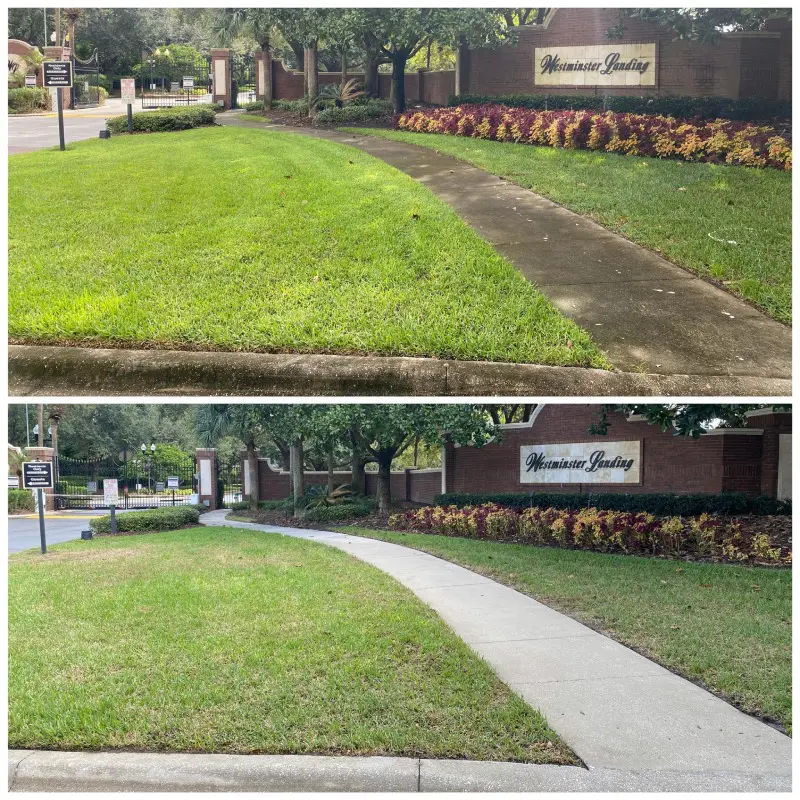
Algae and mildew don’t take a season off in the Orlando metro. Year-round humidity paired with daily summer rain feeds organic growth on every exterior surface of a multi-building property, and it shows up fast. Stucco and hardiboard, the two siding materials you’ll find on most Central Florida apartment buildings, hold moisture and darken faster than other surfaces. Covered breezeways stay damp well into the afternoon. North-facing walls turn green before south-facing ones do. And shaded common-area sidewalks develop a slick algae film that becomes a slip risk long before it looks obviously dirty from the parking lot. For a property manager juggling tenant satisfaction, property tours, and liability exposure, that buildup is a problem that compounds across every building on the property.
Holliday’s Pressure Washing Services handles apartment complex exterior cleaning as a commercial service built around multi-building logistics, tenant coordination, and community-property standards. We bring tenant-safety protocols that include a dedicated ground spotter, a breezeway umbrella escort, and A-frame signage at both ends of every active walkway. Our equipment is commercial-scale: Siamesed pressure washers, a Curbinator for curb runs, a 25-foot camera-tipped gutter vac for steep multi-story roofs, and a hot water unit that hits approximately 250 °F for parking area grease. Every community job follows a runoff-aware cleaning sequence built specifically for properties with storm drains, retention ponds, and shared waterways.
Call (407) 276-1343 or submit a site assessment request to get a scope-specific estimate. Every apartment engagement is assembled from the exact services your property needs, so no two bids look the same.

Each engagement is custom-priced by assembling the individual service lines your property requires, scoped to building count, total surface area, and the specific conditions on the ground. Here is how the per-service pricing breaks down:
Across a multi-building complex, total square footage adds up fast. Factor in linear feet of sidewalks, curbs, and gutters, and each service line stacks on top of the others. Steep apartment roofs that require our gutter vac also add time to the schedule, which is reflected in the estimate.
We bring our own water to most commercial jobs, carrying a 535-gallon onboard tank with fire-hydrant meters for mid-day refills. That cost is built into how we plan the day and folded into the overall estimate.

Apartment complexes that commit to a recurring schedule receive a price break. Twice a year is the frequency we recommend for most Orlando properties, and that is the baseline where contract pricing applies. The specific discount is negotiated directly based on property scope and service frequency.
The quoting process starts with a phone call or online form submission. Tina, our office admin, takes the initial contact and asks qualifying questions about building count, surfaces, problem areas, and access logistics. From there, we assemble a written estimate with clear scope and stated limits. That estimate is in your hands before anything gets scheduled.


Stucco and hardiboard dominate Orlando’s apartment building stock. We soft wash both using sodium hypochlorite mixed with diluted soap, calibrated to the right strength for the surface and the level of organic growth present. The crew works one side of a building at a time so the solution never dries before rinsing. Each side gets a visual re-inspection before the team moves to the next face. Across a property with dozens of buildings, that discipline produces a uniform finish visible from every angle of the complex.

All three follow our standard soft wash chemistry, with one exception: wood. Wood siding requires a wood-safe cleaning agent rather than a bleach-based solution, because sodium hypochlorite can whiten and damage wood grain. We clean wood when a property needs it and match the method to what the surface can safely handle.
Metal siding, signage panels, or decorative exterior features get a more diluted solution, and we keep the metal cool and wet throughout the application to prevent flash-drying and oxidation. If your complex has exposed metal elements, we flag that during the estimate and adjust the chemistry before the crew arrives.
This is where commercial concrete cleaning at apartment scale makes the biggest visual impact. Sidewalks, breezeway floors, dumpster pads, and common-area patios are surface cleaned with water first, then post-treated with sodium hypochlorite. That order is deliberate: only water enters the storm system during the primary cleaning pass, and the post-treatment is applied lightly enough that it dries in place instead of running off into drains.
Curbs run through the Curbinator, a specialty wheeled machine that cleans the flat top, vertical face, and gutter line in one pass. It is built for the kind of volume you see on multi-building properties and HOA communities. Stubborn spots on walkways get a targeted application from a pump-up sprayer at a higher concentration, applied locally rather than running stronger chemistry through the whole system.
Every roof is soft washed. We never apply high pressure to any roofing material. Asphalt shingle, flat tile, barrel tile, metal, and TPO/membrane systems are all in scope. For TPO and membrane roofs where the warranty restricts bleach-based chemistry, we use Dragon Juice, a degreaser that cleans without degrading rubber seals or voiding coverage. Metal roofs get a diluted solution and are kept wet throughout. We avoid walking dirty metal roofs because they become dangerously slippery when coated in growth.


Every apartment complex job includes a dedicated ground spotter whose only role is managing foot traffic during the wash. That person escorts residents through active zones, holds hoses clear, and flags when someone needs to pass. In breezeways, we carry an actual umbrella to shield tenants from overspray and cleaning solution, a step uncommon enough in this industry that most competing bids will not include anything like it. A-frame caution signs go up at both ends of every active sidewalk, and cones line every hose path. If your other bidders can name their tenant-routing protocol with this level of specificity, take the meeting. If they can’t, that tells you something.

On apartment properties, we reverse the typical cleaning order. Concrete surfaces are cleaned with water first so only water enters the storm system. Sodium hypochlorite goes on afterward as a light post-treatment that dries on the surface rather than flowing into drains. Near ponds, lakes, and retention basins, we switch entirely to an eco-friendly alternative, and no bleach-based chemistry goes anywhere near the waterway. That same commitment to keeping chemistry out of drains drives how we approach every section of your property.

We show up with Siamesed pressure washers (two machines plumbed together for higher gallons per minute), the Curbinator for curb runs, a 25-foot camera-tipped gutter vac, a hot water unit running at approximately 250 °F for grease and oil, and a 535-gallon water tank with fire-hydrant refill meters so we arrive self-sufficient. Higher GPM means faster job completion and shorter windows of equipment running on your property, which is why we invest in the largest machines available. A second trailer with a zero-turn riding surface cleaner is being added this year specifically to speed up large commercial concrete work.

When a breezeway, central walkway, or main entry area carries heavy foot traffic during the day, we move that section to after-hours or overnight. We have started commercial jobs as early as 1:30 a.m. to finish before a business opens the next morning. The same approach applies to apartment complexes. We would rather take the overnight shift than create a safety concern for your tenants during the day. Quiet sections of the property can be cleaned during regular hours, and we assess each area individually based on traffic patterns.

Oil removal is not guaranteed at 100%, and every estimate that includes oil work says so upfront. Gutter cleaning delivers a clean result the day of service, though leaves and debris return on their own timeline. For roofs with heavy tree canopy, organic regrowth can come back faster, so we set realistic expectations in the estimate from the start. Every limitation is documented in writing before the contract is signed, because we build long-term relationships with the property teams we serve and that starts with honest communication from day one.

Tina, our office admin, manages intake calls, scheduling, follow-up calls, and review requests. Updates come directly from our office team on a consistent schedule for every job: scheduling confirmation, “on the way” text with an ETA in minutes, completion photos, invoice, online payment, and a follow-up call a few days later to confirm satisfaction and catch anything that surfaced after the property dried.

You reach out by phone or through our online form. Tina takes the call, asks about building count, surfaces, problem areas (algae, rust, oil, graffiti), and access logistics. We build a written estimate from each service line involved, clearly defining scope and any limits. The estimate is in your hands before anything gets scheduled.
Once the estimate is approved, a confirmed date goes on the calendar. For recurring contracts, future visits are pre-set. We recommend that the property management team handle tenant notification directly since your staff has resident email lists and knows which units are vacant. We can leave notes if you prefer, but your team will reach tenants faster. The crew is briefed on the water plan (535-gallon tank on board, fire-hydrant refill points mapped) and any after-hours scheduling requirements for high-traffic sections.
The crew checks in with your property manager or on-site contact. If you want to walk the property and point out specific concerns before work starts, we do that first. A-frame signs go up at both ends of every active sidewalk. Cones line the hose paths. The ground spotter takes position near active breezeways with the tenant umbrella. Electrical outlets, doorbells, security cameras, and garage door openers on the first building are taped watertight before any solution is applied.
Each building is soft washed one side at a time. The crew applies sodium hypochlorite mixed with diluted soap at the calibrated strength for the siding material and level of growth, rinses each side, visually re-checks it, then moves to the next face. Metal surfaces get a more diluted mix and are kept cool and wet throughout. Once buildings are complete, shared concrete follows the same water-first, post-treat sequence described above. Curbs and stubborn spots are addressed with specialty equipment as the crew works through each section of the property.
Gutters are cleared building by building. The camera-tipped gutter vac goes up on steep or tall roofs where walking is not safe. If the approved scope includes oil removal, the crew applies commercial-grade degreaser, scrubs, allows a dwell period of approximately 20 minutes, then follows with hot water at roughly 250 °F. Rust removal uses oxalic acid at the lowest effective strength. Graffiti removal uses a dedicated solution and a separate process.
Every surface is inspected before the crew leaves. Any missed spots are handled before the crew moves on. Photos are sent to the property manager. The invoice goes out and online payment is collected. A few days later, Tina calls to confirm everything looks right now that the property has had time to dry. That follow-up call exists specifically to catch issues that only become visible days after the wash. If a recurring contract is in place, the next visit is already on the calendar.
We guarantee a spot-free finish when the crew leaves your property. If a missed area surfaces after the fact, we schedule a return and touch it up at no extra charge. Beyond that, if something is damaged during the wash, we fix it. The follow-up call Tina makes a few days after every visit is designed to catch exactly those kinds of issues before the job is fully closed out.
What falls outside that guarantee:


We recommend that property management handle tenant communication directly. Your team has the resident email lists, knows which units are occupied, and can target the notice to the right people. We can leave door notices if that helps, but you will get better coverage managing it on your end.
We assign a ground spotter to every apartment complex job. That person manages foot traffic, not cleaning. In active breezeways, we use an umbrella to physically shield residents from overspray. A-frame caution signs go up at both ends of every active sidewalk, and cones mark every hose path. For high-traffic sections, we schedule work after hours or overnight.
Concrete surfaces are cleaned with water first so only water goes down the drain. Sodium hypochlorite is applied afterward as a post-treatment that dries in place. Near ponds, lakes, or retention basins, we substitute an eco-friendly alternative. No bleach-based chemistry is used near any waterway on your property.
We handle stucco, hardiboard, vinyl, brick, wood, and metal siding. Metal gets extra care with a diluted solution and is kept cool and wet throughout. For roofing, we clean asphalt shingle, flat tile, barrel tile, metal, and TPO/membrane systems. TPO roofs with warranty restrictions against sodium hypochlorite are cleaned with Dragon Juice instead.
Every engagement is priced based on the specific services your property needs. Building exterior soft washing starts at ~12¢ per square foot (up to 20¢/sq ft). Shared concrete runs about 15¢/sq ft. Roof cleaning ranges from ~18¢/sq ft for asphalt shingle to ~35¢/sq ft for barrel tile. Total pricing depends on building count, surface types, accessibility, and any add-on work like oil or rust removal.
Yes. Complexes that commit to a recurring schedule receive a price break. Twice a year is the frequency we recommend for most Orlando properties, and that is where contract pricing kicks in. The exact discount is negotiated based on property scope and frequency.
We do not guarantee 100% removal of oil stains, and every estimate that includes this work says so clearly. We apply commercial-grade degreaser, scrub the area, allow it to dwell, and follow with hot water at approximately 250 °F. Results are often significant, but deeply soaked-in oil can leave a faint residual shadow.
No. We check in with your on-site contact at arrival, offer a walk-through at the end, and handle everything in between. Photos are sent when the job is complete, and the invoice is collected online. Full-day on-site presence is not required.
We recommend at least twice a year for building exteriors and shared concrete. Central Florida’s humidity drives continuous organic regrowth, and shaded surfaces develop visible buildup faster. Gutters may need more frequent clearing depending on tree coverage, especially before rainy season. A recurring schedule costs less per visit than one-off work because the crew already knows your property.
Yes. We regularly schedule commercial work after hours or overnight for high-traffic areas. Main breezeways, central walkways, and property entry points are the sections we most commonly shift to overnight scheduling. We would rather take the late shift than create a safety concern for your tenants during the day.
If the buildings are showing algae, the sidewalks are darkening, or the breezeways are starting to look like they haven’t been touched in a year, every week without cleaning costs you in tenant impressions and property value. We scope every apartment engagement around the specific buildings, surfaces, and conditions on your property, so the work matches exactly what needs to happen.
Call (407) 276-1343 or fill out our online contact form to get started.

